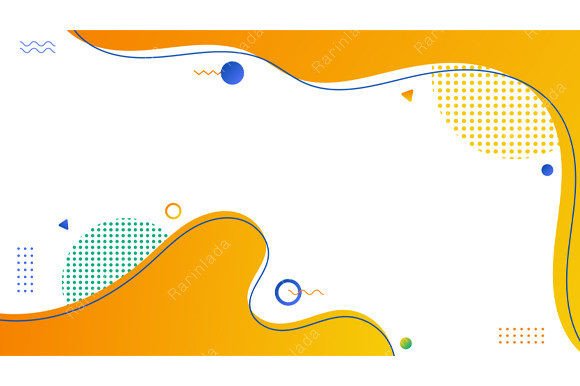
Unlocking the Power of Abstract Yellow Liquid Gradient Shapes for Modern Web Templates
In the ever-evolving landscape of digital design, visual elements play a pivotal role in capturing attention and conveying brand identity. Among the most trending and versatile assets available to designers today are abstract yellow liquid gradient shapes. These dynamic forms, often featured in abstract banner web templates, combine fluid organic lines with vibrant color transitions to create visuals that feel both modern and energetic. Whether you are a seasoned graphic designer or a business owner looking to refresh your online presence, understanding the utility and technical specifications of these vector illustrations is essential.
This article explores the significance of these design elements, their practical applications in various industries, and why high-resolution, fully editable vector files are the gold standard for professional creativity.
The Anatomy of Fluid Design: More Than Just Colors
At first glance, an abstract banner featuring yellow liquid gradient shapes might seem like a simple decorative choice. However, these designs are rooted in deep psychological and aesthetic principles. The use of "liquid" shapes mimics the natural flow of water, oil, or lava, creating a sense of movement and life on a static screen. When paired with a gradient—a gradual blending of one color to another—the effect adds depth and dimension that flat colors simply cannot achieve.
The color yellow, specifically, holds significant power in color psychology. It is associated with optimism, energy, creativity, and warmth. In a business context, incorporating yellow into your web templates can stimulate mental activity and generate muscle energy. When this vibrant hue is applied to fluid, geometric elements on a clean white background, the result is a striking contrast that draws the eye immediately to the focal point of the design.
Why Vector Graphics Are Superior for Professional Use
One of the most critical aspects of the design assets described in our topic is that they are 100% vector. For those new to graphic design, it is important to understand the difference between raster images (like standard photos) and vector graphics. Raster images are made of pixels; when you enlarge them, they become blurry or pixelated. Vectors, on the other hand, are based on mathematical paths.
This distinction is vital for several reasons:
- Scalability: You can resize a vector illustration from a tiny icon to a massive billboard without losing any quality. This makes them perfect for responsive web design, where images must look crisp on everything from a smartphone to a 4K monitor.
- Editability: Because the file is fully editable, designers can change the shape, color, opacity, and position of every element. If your brand colors shift from yellow to orange, you can make that adjustment instantly without needing to redraw the entire image.
- File Efficiency: Vector files, such as EPS Version 10, are often smaller in file size compared to high-resolution raster images, which helps improve website loading speeds—a crucial factor for SEO and user experience.
Practical Applications in Business and Technology
The versatility of abstract yellow liquid gradient shapes extends far beyond simple decoration. In the modern digital economy, these assets serve functional purposes across various sectors.
Web Development and UI/UX Design
In web template creation, these graphics are frequently used as hero banners, section dividers, or background overlays. A common misunderstanding is that abstract art distracts from content. However, when used correctly on a white background, these shapes guide the user's eye toward call-to-action buttons or key headlines. The fluid nature of the shapes creates a natural flow, leading the viewer through the page layout intuitively.
For technology startups and SaaS companies, these designs convey innovation. The blend of geometric elements with organic liquids suggests a harmony between structured data and human creativity, a narrative many tech firms wish to project.
Marketing and Branding Materials
Marketing professionals rely on high-impact visuals to stop the scroll on social media feeds. An abstract banner with vibrant gradients stands out against the clutter of standard stock photography. Furthermore, because these files are provided in high resolutions (300 DPI), they are not limited to digital screens. They are equally effective in print media, such as brochures, business cards, and large-format event signage.
Consider a financial consultancy firm wanting to appear approachable yet forward-thinking. Using a template with warm yellow gradients can soften the typically cold perception of finance, making the brand feel more accessible to younger demographics.
Technical Specifications: What You Need to Know
When acquiring design assets, understanding the file formats is crucial for workflow efficiency. The resources discussed here typically include the following:
- EPS Version 10: This is a universal vector format compatible with a wide range of software. It ensures that even users with slightly older versions of design programs can open and edit the files without issues.
- JPG: While vectors are best for editing, JPGs are essential for immediate use in presentations, word documents, or quick web uploads where editing is not required.
- No Watermark: Professional assets should always be delivered without watermarks, ensuring a clean, ready-to-use final product.
These files are readable by industry-standard vector-based graphic programs such as Adobe Illustrator and Corel Draw. This compatibility ensures that whether you are a Mac or PC user, or prefer Adobe's ecosystem over Corel's, you have the tools necessary to manipulate the geometric elements to suit your specific needs.
Clarifying Common Misconceptions
A frequent assumption among beginners is that "abstract" means "random" or "easy to make." In reality, creating balanced liquid gradient shapes requires a keen eye for composition and color theory. The placement of geometric elements must be deliberate to maintain visual harmony. Additionally, some users believe that high-resolution (300 DPI) is only necessary for print. While true that print demands high DPI, having a high-res source file ensures that any rasterized export (like a JPG) remains sharp even on high-density retina displays used in modern laptops and tablets.
Integrating Creativity into Daily Workflows
For educators and students in design fields, working with 100% vector files offers an excellent learning opportunity. By deconstructing these pre-made templates, learners can understand how complex gradients are built, how layers are organized, and how transparency modes affect the overall look. It bridges the gap between theoretical knowledge and practical application.
In daily corporate activities, these templates save time. Instead of spending hours designing a banner from scratch, a marketing team can download a fully editable file, swap in their logo, adjust the text, and have a professional asset ready in minutes. This efficiency allows teams to focus more on strategy and content rather than getting bogged down in repetitive design tasks.
Conclusion: The Future of Digital Aesthetics
The integration of abstract yellow liquid gradient shapes into web templates represents a shift towards more dynamic, emotionally resonant digital experiences. They offer a perfect blend of artistic flair and technical precision. By utilizing high-resolution, no watermark vector files, professionals ensure their work stands the test of time and technology.
Whether you are building a new website, launching a marketing campaign, or teaching the next generation of designers, these assets provide a robust foundation. They remind us that in the digital age, flexibility and clarity are paramount. With the right tools—like Adobe Illustrator or Corel Draw—and the right resources, the potential for creativity is limitless. Embrace the fluidity of modern design, and let these vibrant, geometric elements elevate your visual storytelling to new heights.