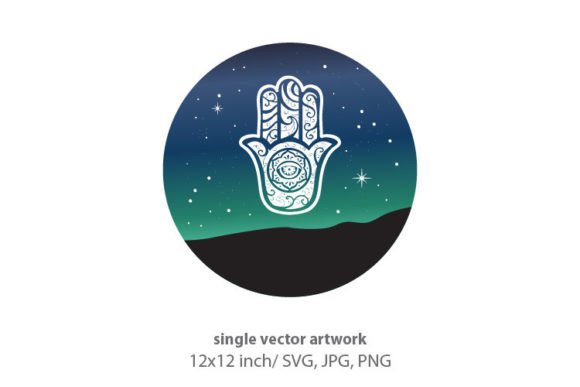
Hand of God SVG: A Versatile Design Asset
The concept of the Hand of God has captivated artists, theologians, and creators for centuries. Representing divine intervention, creation, protection, or guidance, this powerful imagery transcends cultural boundaries. In the digital age, this timeless symbol has found a new home in vector graphics, offering a bridge between ancient symbolism and modern design needs. When you access a high-quality digital file of this motif, you are not just downloading an image; you are acquiring a flexible tool that can adapt to countless projects, from personal crafts to commercial branding.
Understanding the value of such a graphic requires looking beyond the file format. Whether you are a seasoned graphic designer or someone picking up a cutting machine for the first time, the utility of a well-crafted Hand of God illustration lies in its adaptability. The specific asset described here—a 12x12 inch artboard at 300 DPI in RGB, including SVG, JPG, and PNG formats created in Adobe Illustrator—serves as a prime example of how technical specifications meet creative intent.
Why This Symbol Resonates Across Different Creators
The appeal of the Hand of God is not monolithic; it shifts depending on who is holding the design tool. For a religious educator, the image is a teaching aid, a visual representation of faith to be used in Sunday school worksheets or church bulletins. For a tattoo artist, it represents a permanent commitment to spiritual beliefs, requiring clean lines and scalable vectors to ensure the design holds up on skin. Meanwhile, a small business owner selling handmade jewelry might see it as a trending aesthetic that appeals to customers looking for meaningful, bohemian-style accessories.
This divergence in purpose highlights why the format of the file matters so much. A raster image (like a standard photo) might suffice for a quick social media post, but it fails when a user needs to resize the image for a large wall mural or shrink it for a delicate pendant. This is where the SVG file included in the package becomes critical. As a vector format, it allows the design to be scaled infinitely without losing clarity. This technical feature directly supports the creative goals of professionals who demand precision and hobbyists who want forgiveness when resizing their projects.
Tailoring the Asset to Your Skill Level and Goals
Different users evaluate digital assets based on different priorities. Here is how various groups might approach using this specific Hand of God collection:
- Beginners and Hobbyists: For those new to digital crafting, the inclusion of a PNG file with a transparent background is often the most immediate value. It allows for "drag-and-drop" simplicity. A beginner making homemade greeting cards or party invitations can import the PNG directly into user-friendly software without needing to understand layers or vector nodes. The 300 DPI resolution ensures that even if they print these items on a home printer, the edges remain crisp, avoiding the pixelation that ruins amateur projects.
- Professional Designers and Marketers: A professional working on a logo design or a web interface will prioritize the SVG file. Created in Adobe Illustrator, this file offers editable paths. A marketer might need to adjust the thickness of the lines to match a brand's style guide or change the color palette from traditional gold and blue to something more corporate or modern. The ability to manipulate the vector data means the Hand of God can be integrated seamlessly into a larger brand identity system rather than just sitting on top of a background.
- Entrepreneurs and Small Business Owners: For someone running an Etsy shop or a local print-on-demand business, versatility is currency. The zip file containing multiple formats (SVG, JPG, PNG) means one purchase covers multiple product lines. They can use the high-resolution JPG for mockups on their website, the SVG for cutting vinyl decals with a Cricut or Silhouette, and the PNG for sublimation printing on mugs or t-shirts. This flexibility reduces overhead costs and speeds up time-to-market for new products.
- Educators and Publishers: Those creating educational materials or books need reliability and clarity. The 12x12 inch artboard size provides a generous canvas, allowing the image to be cropped or isolated easily for textbook illustrations or presentation slides. The clean lines of a vector-based drawing ensure that the image reproduces well in black and white printing, which is often a requirement for academic handouts or worksheets.
Practical Applications Beyond the Screen
The true test of a digital graphic is how it translates into the physical world. The Hand of God design, with its intricate details and symbolic weight, excels in tangible applications. Consider the realm of handmade craft items. A crafter using a laser cutter or a vinyl cutter relies heavily on the precision of the SVG path. If the lines are not closed or the nodes are messy, the machine will fail. A file made in a professional program like Adobe Illustrator typically adheres to strict geometric standards, ensuring that the cut is smooth and accurate.
In the context of stationery and invitations, the emotional resonance of the image adds value to the paper product. A wedding invitation featuring this motif suggests a blessing over the union, while a funeral announcement might use it to signify comfort and ascension. The 300 DPI resolution is non-negotiable here; anything lower would result in fuzzy text or jagged edges when printed on high-quality cardstock, diminishing the perceived value of the event itself.
Furthermore, the application extends to web design and digital marketing. While the JPG and PNG are useful for static images, the SVG format is increasingly preferred for responsive websites. It loads quickly and scales perfectly on mobile devices, tablets, and desktop monitors alike. A blogger writing about spirituality or a nonprofit organization raising funds for disaster relief can embed the Hand of God SVG directly into their site code, ensuring the image looks sharp on any screen size without slowing down page load times.
Evaluating Quality and Long-Term Usefulness
When deciding whether a specific digital asset fits your needs, consider the long-term utility. A low-resolution clipart might work for a one-off meme, but it lacks the longevity required for building a brand or a portfolio. The investment in a high-quality, multi-format pack pays off through repeated use. You might start by using the image for a single announcement card, but months later, find yourself using the same vector file to create a watermark for your photography business or a stencil for a community art project.
The color palette also plays a role in flexibility. An RGB color profile is standard for digital screens, ensuring vibrant colors on monitors and smartphones. However, because the source is a vector file, converting these colors to CMYK for professional offset printing is a straightforward process for those who need it. This adaptability ensures that the design remains viable whether your project lives online or in print.
Ultimately, the Hand of God graphic serves as a conduit for expression. It allows the user to project their own intentions onto the design. For the believer, it is a statement of faith; for the artist, it is a study in form and line; for the entrepreneur, it is a product with market appeal. By providing the right technical foundation—clean vectors, high resolution, and multiple file types—the asset empowers users across the spectrum to execute their vision with confidence and quality.
Whether you are designing a logo that needs to stand the test of time, creating party decor for a baptism, or simply adding a touch of meaning to a personal journal, the versatility of this digital element supports your journey. It bridges the gap between the conceptual and the concrete, proving that in the right hands, a digital file can become something profoundly real.