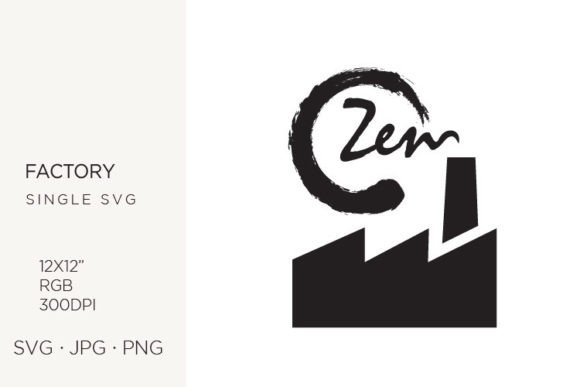
Factory Building Illustration with Zen W for Designers
In the fast-paced world of digital creation, finding assets that balance technical precision with artistic flexibility is often the difference between a good project and a great one. The Factory Building Illustration with Zen W represents a specific type of vector resource designed to bridge the gap between industrial aesthetics and clean, modern design principles. Unlike standard clipart that may feel rigid or outdated, this illustration set is crafted within Adobe Illustrator, ensuring that every line, curve, and color block adheres to professional standards. For creators ranging from graphic designers to small business owners, understanding how to leverage these high-resolution files can significantly streamline workflows and elevate the final output of various projects.
At its core, this asset is a vector-based collection featuring an artboard size of 12 x 12 inches at a resolution of 300 DPI in the RGB color palette. While those specifications might sound purely technical, they translate directly into practical usability. The 300 DPI resolution ensures that when you print these elements on physical media—such as invitations, stationery, or wall art—the image remains crisp and free of pixelation. Meanwhile, the vector nature of the files, available in SVG, JPG, and PNG formats, means you can scale the factory building up to billboard size or down to a jewelry charm without losing any detail. This scalability is crucial for professionals who need a single asset to work across multiple mediums, from a website favicon to a large-format trade show banner.
Enhancing Brand Identity with Industrial Elegance
One of the most compelling applications for the Factory Building Illustration with Zen W is in logo design and brand identity development. Many modern startups, particularly in the tech, logistics, and manufacturing sectors, seek visuals that convey stability, production capability, and innovation. A generic factory icon often looks too literal or cluttered, but a "Zen" styled illustration implies efficiency, cleanliness, and a streamlined approach to industry. By utilizing the SVG file format included in this pack, a designer can easily deconstruct the building elements, recolor them to match a specific brand palette, and integrate them into a unique logomark.
Consider a freelance branding specialist working with a new sustainable packaging company. They need a visual that suggests a facility where goods are made but also emphasizes an eco-friendly, calm, and organized environment. The Zen W style offers exactly that narrative. Instead of spending hours sketching a concept from scratch, the designer can import the vector file, adjust the stroke weights, and modify the geometry to fit the client's vision. This approach not only saves time but also ensures the geometric integrity of the design remains intact, something that is difficult to achieve when rasterizing images or working with low-quality clipart.
Versatility Across Print and Digital Media
The true value of these digital graphics elements lies in their adaptability across different formats. Because the files are provided in SVG, JPG, and PNG, they cater to both web and print requirements seamlessly. For web designers, the SVG format is invaluable. It allows the factory illustration to load quickly on websites while remaining sharp on high-DPI retina displays. You can use CSS to animate parts of the building or change colors dynamically based on user interaction, creating an engaging experience for visitors to an industrial or corporate site.
On the print side, the 12 x 12 artboard size provides a generous canvas for creating handmade craft items and printed paper goods. Educators and hobbyists can utilize these files to create educational materials about community helpers or industrial processes, printing them onto cardstock for classroom decorations. Similarly, event planners organizing corporate parties or industrial-themed gatherings can incorporate these illustrations into invitations, announcements, and party decor. The high resolution ensures that even when printed on textured paper or fabric, the details of the factory structure remain clear and professional.
Furthermore, the RGB color palette is optimized for digital screens, making these illustrations ideal for social media graphics, blog headers, and email newsletters. Marketers can overlay text on the PNG versions to create quick promotional banners that highlight sales, new product launches, or company milestones. The clean lines of the Zen W style ensure that text remains legible, avoiding the visual noise that often plagues busier stock illustrations.
Streamlining Workflows for Creators and Entrepreneurs
For entrepreneurs and small business owners who often wear multiple hats, time is the most scarce resource. Sourcing high-quality visuals that do not require extensive editing can drastically reduce project turnaround times. The Factory Building Illustration with Zen W eliminates the need to commission custom artwork for every single need. Whether you are designing a brochure for a real estate development featuring industrial lofts or creating a presentation deck for investors in the manufacturing sector, having a ready-to-use, professional-grade asset allows you to focus on strategy and content rather than execution details.
Freelancers, in particular, benefit from the modular nature of vector files. Since the graphics are made in Adobe Illustrator, users with access to the software can ungroup elements and repurpose individual components. A smokestack from the factory illustration could become a graphic element in a pattern design for textile printing, or the windows could be isolated to create a background texture for a website. This level of customization supports creativity by providing a strong foundation that can be built upon, rather than a finished image that limits artistic expression.
Practical Considerations and Limitations
While the benefits of using vector-based illustrations like the Factory Building with Zen W are numerous, it is important to approach their usage with a clear understanding of their intended context. These files are optimized for the RGB color space, which is standard for digital displays. If your primary goal is large-scale commercial printing that requires CMYK color separation, such as for offset printing presses, you will need to convert the colors in your design software. While modern conversion tools are effective, some vibrant RGB hues may shift slightly, so reviewing a proof before mass production is always recommended.
Additionally, the "Zen" aesthetic implies a specific stylistic choice—minimalist, balanced, and perhaps less detailed than a photorealistic rendering. This style works exceptionally well for modern brands, tech companies, and lifestyle products but might not suit projects requiring a gritty, hyper-realistic, or historical industrial look. Users should evaluate whether the clean lines and simplified forms align with their specific communication goals. For instance, a historical documentary about the industrial revolution might require more textured and aged visuals, whereas a startup app for supply chain management would benefit greatly from the clarity of the Zen W style.
It is also worth noting that while the 12 x 12 artboard is versatile, extremely large format prints (like building wraps) may still require careful scaling and verification of line weights to ensure visibility from a distance. Vector files scale infinitely, but the visual impact of thin lines can diminish if the viewing distance is significant. Designers should test their layouts at actual size to confirm that the details of the factory illustration hold up in the intended environment.
Making the Most of Your Digital Assets
To truly maximize the potential of the Factory Building Illustration with Zen W, consider integrating it into a broader design system rather than using it as a standalone image. Combine the vector elements with complementary typography, icons, and color schemes to create a cohesive visual language. For bloggers and content creators, this consistency helps in building brand recognition. When your audience sees the distinctive style of your graphics across your website, social media, and downloadable resources, it reinforces your professional identity.
Moreover, don't hesitate to experiment with the file formats. Use the PNGs for quick mockups and presentations where transparency is needed without the complexity of vector editing. Reserve the SVG and original Illustrator files for final production work where edits might still be necessary. By organizing your workflow around the strengths of each format, you can maintain efficiency without sacrificing quality.
In conclusion, the Factory Building Illustration with Zen W offers a robust solution for a wide array of creative challenges. Its combination of high-resolution raster options and scalable vector formats makes it a versatile tool for anyone involved in visual communication. Whether you are crafting a handmade card, designing a corporate logo, or developing a web interface, these assets provide the structural integrity and aesthetic appeal needed to produce standout results. By understanding the technical specifications and applying them thoughtfully to your specific use cases, you can enhance your creative output and deliver more value to your clients and audience.